Service

Our Services

Services Built Specifically For Your Business.

Website Development

Crafting Websites That Speak Your Brand's Language – Design Your Digital Identity!

Digital Marketing

Boost Your Online Presence and Reach the Right Audience with - Smart Digital Marketing Strategies!

App Development

Turning Ideas into Engaging Mobile Experiences – Build or Customise Your Dream App with Us!

UI/UX Design

Designing Intuitive Interfaces and Exceptional Experiences – Where Creativity Meets Usability!

Join In Our Team

Please, Call Us To join in Our Team.
Our Blog

Our Blog

Visit Our Blog for Latest Technical Updates.

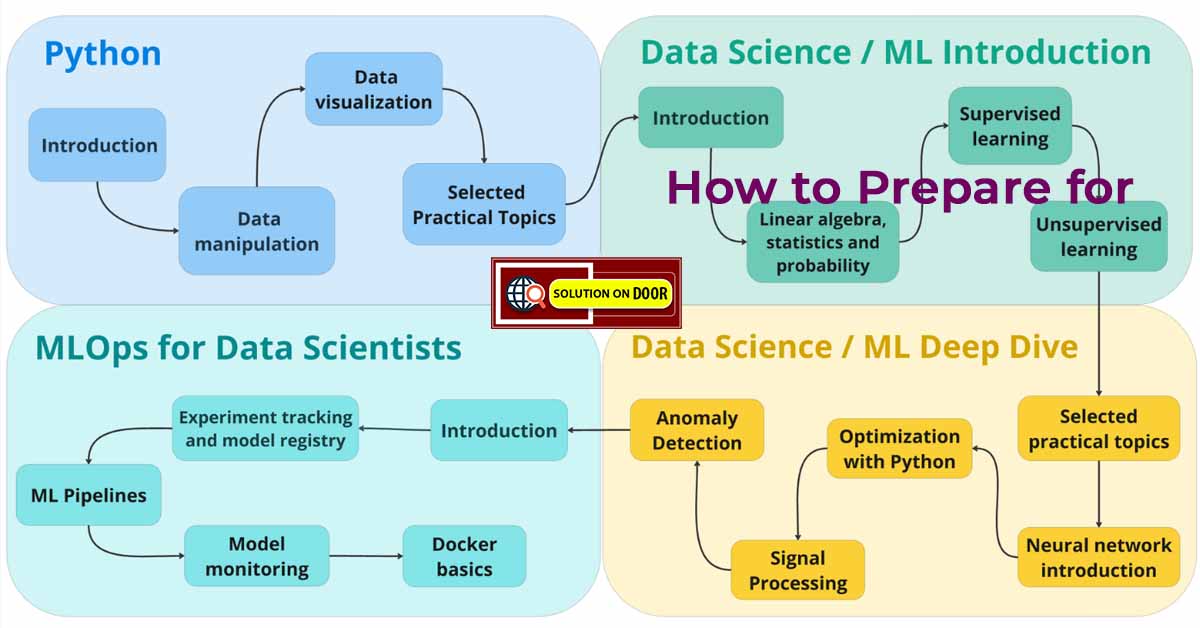
Roadmap for Machine Learning: A Complete Career Guide

🚀 Roadmap for Machine Learning: A Complete Career Guide (2026)

Machine Learning (ML) is one of the fastest-growing fields in technology today. From recommendation systems on Netflix to self-driving cars and AI chatbots, Machine Learning is shaping the future of industries worldwide.

If you are planning to build a career in Machine Learning, this guide will help you understand the complete roadmap, career opportunities, hiring trends, salary expectations, and how to get a job in this field.
📌 What is Machine Learning?

Machine Learning is a branch of Artificial Intelligence (AI) that enables computers to learn from data and make decisions without being explicitly programmed. It focuses on building algorithms that improve automatically through experience.

ML is widely used in healthcare, finance, education, e-commerce, cybersecurity, and automation.

🛣️ 1. Roadmap for Machine Learning

To become a successful Machine Learning professional, follow this step-by-step roadmap.


✅ Step 1: Learn Mathematical Foundations

Strong fundamentals are essential for understanding ML algorithms.

You should focus on:

  1. Optimization Techniques
  2. Linear Algebra
  3. Probability & Statistics
  4. Calculus

✅ Step 2: Master Programming Skills

Python is the most popular language for Machine Learning.

Learn:

  • Python Basics
  • NumPy & Pandas
  • Data Visualization (Matplotlib, Seaborn)
  • SQL for Data Handling

✅ Step 3: Understand Core Machine Learning Concepts

Start with traditional ML techniques:

  1. Model Evaluation
  2. Supervised Learning
  3. Unsupervised Learning
  4. Regression & Classification
  5. Clustering

✅ Step 4: Learn Advanced Machine Learning

After mastering basics, move to advanced topics:

  • Deep Learning
  • Neural Networks
  • Natural Language Processing (NLP)
  • Computer Vision
  • Reinforcement Learning

✅ Step 5: Work with ML Tools & Frameworks

Practical knowledge of tools is necessary:

  • Scikit-Learn
  • TensorFlow
  • PyTorch
  • Keras
  • OpenCV
  • SpaCy & NLTK

✅ Step 6: Build Real-World Projects

Projects prove your skills to employers.

Some project ideas:

  • Face Recognition System
  • Sales Prediction Model
  • Chatbot Application
  • Recommendation System
  • Fraud Detection System

Publish your projects on GitHub and create demos.

🎯 2. Career Options in Machine Learning

Machine Learning offers multiple career paths.

Popular Job Roles:

  • Machine Learning Engineer
  • Data Scientist
  • AI Engineer
  • NLP Engineer
  • Computer Vision Engineer
  • Research Scientist
  • MLOps Engineer

Each role requires a combination of programming, analytics, and domain knowledge.

📈 3. Current Hiring Trends in Machine Learning

In 2026, Machine Learning professionals are in high demand across industries.

Top Hiring Sectors:

  • IT & Software Companies
  • FinTech & Banking
  • Healthcare & BioTech
  • E-Commerce Platforms
  • Automotive & Robotics
  • EdTech Companies
  • AI Startups

In-Demand Skills:

  • Deep Learning
  • NLP & Transformers
  • Cloud ML
  • MLOps
  • AI Deployment

Candidates with hands-on experience and deployment knowledge are preferred.


💰 4. Salary Range in Machine Learning

Salary depends on experience, skills, and location.


📍 Salary in India

ExperienceAverage Salary
Fresher₹4 – ₹8 LPA
2–4 Years₹8 – ₹18 LPA
5+ Years₹20 – ₹40 LPA

🌍 Global Salary (USA/Europe)

ExperienceSalary (USD)
Entry Level$90K – $120K
Mid Level$120K – $160K
Senior Level$160K+

🎓 5. How to Get a Job in Machine Learning?

Getting a job in ML requires strategy, practice, and consistency.


🔹 Step 1: Learn from Quality Resources

Use platforms like:

  • Coursera
  • Udemy
  • edX
  • YouTube
  • Kaggle

Focus on practical learning.


🔹 Step 2: Build a Strong Portfolio

Your portfolio should include:

  • 5–8 Quality Projects
  • GitHub Profile
  • Technical Blog (Optional)
  • Live Project Demos

This helps recruiters evaluate your skills.


🔹 Step 3: Prepare for Interviews

Prepare for:

  • ML Algorithms
  • Python Coding
  • Data Structures
  • Statistics
  • Case Studies

Practice on LeetCode, Kaggle, and HackerRank.


🔹 Step 4: Apply Smartly

Apply through:

  • LinkedIn Jobs
  • Naukri.com
  • Indeed
  • AngelList
  • Company Career Pages

Customize your resume for each job role.


🔹 Step 5: Learn Deployment & MLOps

Modern companies expect candidates to know:

  • Model Deployment
  • Docker
  • Cloud Platforms
  • CI/CD Pipelines
  • API Integration

This increases your hiring chances.


🌟 Tips for Success in Machine Learning

✔ Learn continuously
✔ Participate in Kaggle competitions
✔ Follow AI researchers
✔ Attend webinars and meetups
✔ Build industry-relevant projects
✔ Network on LinkedIn


📌 Conclusion

Machine Learning is a future-proof career with excellent growth opportunities. By following the right roadmap, building strong projects, and staying updated with industry trends, you can successfully enter this exciting field.

How to Prepare for Object-Oriented Programming

How to Prepare for Object-Oriented Programming (OOP): A Roadmap for BTech Students

Object-Oriented Programming (OOP) is a fundamental concept in software development. It helps in structuring programs efficiently and is widely used in real-world applications. For BTech students, mastering OOP is crucial as it forms the base for advanced programming and development.

In this guide, we will explore a structured roadmap to learning OOP and provide information on free online platforms where you can test your knowledge.

Step-by-Step Roadmap to Master OOP

1. Understand the Basics of Programming

Before diving into OOP, ensure you have a solid understanding of basic programming concepts such as variables, loops, and functions. Recommended languages for OOP include Java, C++, Python, and C#.

2. Learn the Core OOP Principles

The four fundamental OOP principles are:

  • Encapsulation: Bundling data and methods together.
  • Inheritance: Reusing and extending existing classes.
  • Polymorphism: Using a single interface for different data types.
  • Abstraction: Hiding implementation details and showing only functionality.

3. Study Object-Oriented Programming Concepts

Key concepts to focus on:

  • Classes and Objects
  • Constructors and Destructors
  • Access Modifiers (Public, Private, Protected)
  • Static and Final Keywords
  • Method Overloading and Overriding
  • Interfaces and Abstract Classes
  • Exception Handling in OOP
  • File Handling and Serialization

4. Practice with Small Projects

Start by implementing small projects such as:

  • A Library Management System
  • A Student Record System
  • A Simple Bank Account Management System

This will help reinforce concepts and enhance problem-solving skills.

5. Read Books and Online Documentation

Some excellent resources for learning OOP include:

  • “Object-Oriented Programming in C++” by Robert Lafore
  • “Head First Java” by Kathy Sierra & Bert Bates
  • “Python Crash Course” by Eric Matthes
  • Official documentation of Java, C++, and Python

6. Work on Real-World Applications

Once comfortable, try contributing to open-source projects or developing applications that solve real-world problems.

Best Online Platforms to Test OOP Skills for Free

1. HackerRank (www.hackerrank.com)

  • Offers coding challenges specific to OOP concepts.
  • Covers Java, C++, and Python.

2. LeetCode (www.leetcode.com)

  • Contains a dedicated section for Object-Oriented Design problems.
  • Best for improving logical thinking.

3. GeeksforGeeks Practice (www.practice.geeksforgeeks.org)

  • Provides MCQs and coding problems on OOP.
  • Includes interview-level questions.

4. CodeChef (www.codechef.com)

  • Offers various problem sets that include OOP-based solutions.

5. W3Schools OOP Quiz (www.w3schools.com)

  • A great place to test theoretical knowledge.
  • Covers Java, Python, and C++.

6. Udemy and Coursera Free Courses

  • Some free courses include interactive OOP tests and exercises.

Mastering OOP requires continuous learning and practice. Following this structured roadmap will help you build a strong foundation. Additionally, testing your skills on free online platforms will prepare you for coding interviews and real-world application development.

Hugging Face Champions Open-Source AI in White House Action Plan

Hugging Face Champions Open-Source AI in White House Action Plan

In a recent submission to the White House Office of Science and Technology Policy, Hugging Face has underscored the pivotal role of open-source AI systems and open science in advancing artificial intelligence. Their response to the White House AI Action Plan Request for Information (RFI) emphasizes that openness not only enhances AI performance and efficiency but also ensures broader, reliable adoption and adherence to stringent security standards.

he Case for Open Source in AI Development

Hugging Face’s platform, which hosts over 1.5 million public models across various domains, serves as a testament to the power of open-source collaboration. They argue that recent advancements in open-source models have demonstrated capabilities on par with, or even surpassing, those of proprietary systems, all while being more cost-effective. This democratization of AI technology allows a wider array of developers and organizations to contribute to and benefit from AI innovations, fostering a more inclusive technological ecosystem.

Recommendations for the AI Action Plan

In their submission, Hugging Face offers several key recommendations:

  1. Recognize Open Source and Open Science as Fundamental to AI Success: They advocate for the acknowledgment of open-source contributions as essential drivers of AI progress, enabling transparency, reproducibility, and accelerated innovation.
  2. Prioritize Efficiency and Reliability: By focusing on creating efficient and reliable AI systems, the community can ensure that AI technologies are accessible and beneficial to a broader audience, reducing barriers to entry and operational costs.
  3. Secure AI through Openness: Emphasizing that open, traceable, and transparent systems are inherently more secure, Hugging Face suggests that openness allows for continuous peer review and rapid identification of vulnerabilities, enhancing overall trust in AI systems.

Collaborative Efforts and Future Directions

Hugging Face’s commitment to open-source principles is further exemplified by their recent collaborations. Notably, they have partnered with AI hardware company Cerebras to integrate advanced inference capabilities into the Hugging Face Hub, providing developers with access to models running on Cerebras’ CS-3 system. This integration offers inference speeds significantly higher than conventional GPU solutions, showcasing the potential of open-source frameworks combined with cutting-edge hardware.

By championing open-source methodologies and advocating for their inclusion in national AI strategies, Hugging Face aims to create a more equitable and innovative AI landscape. Their recent initiatives and recommendations highlight the importance of collaboration, transparency, and accessibility in shaping the future of artificial intelligence.